The trim conversation is full of folklore. Trims do not make hair grow faster; nothing done to the dead fiber at the end of a strand can change what the follicle does at the scalp. And yet people who trim regularly really do end up with longer hair. Both things are true, and the reconciliation is the whole science of the split end: hair length is growth minus breakage, and trims control the breakage side of the equation.
Understanding what a split end actually is turns trim timing from a salon sales pitch into simple maintenance you can judge for yourself, in Matthews or anywhere.
What a split end is, and why it travels
A hair strand is a structure of overlapping scales around a core. Age, heat, friction, chemical services, and weather strip those scales, and eventually the end of the strand frays and splits into two or more pieces, like a rope unraveling. The critical property of a split is that it travels: the fraying continues up the strand over time, weakening it further and breaking off in pieces. A split caught at a quarter inch costs a quarter inch at the trim. A split ignored for six months can cost several inches of damaged, thinning ends, plus the breakage happening all along the way.
- Ends feel rough or straw-like while the mid-lengths feel fine
- Single-strand knots and tangles concentrate at the ends
- You can see white dots or Y-shaped splits at the tips
- Ends look visibly thinner and more see-through than the hair above
- Styles stop holding at the ends even when the rest behaves
- It has been three or more months since the last trim, with daily heat use
Any two or three of those signs together mean the ends are spending your growth. The mirror check is easy: hold a section of ends against a dark shirt, or a light one for dark hair, and look at the last inch honestly.
Schedules by hair and habit
The generic advice of every six to eight weeks is a starting point, not a law. Fine hair and hair that is colored, lightened, or heat-styled frequently damages faster and usually does best at the shorter end of the range, around six to ten weeks. Thick, virgin, low-heat hair can often stretch to ten to twelve weeks or a bit beyond. Curly and coily hair, worn natural and handled gently, may go longer still, though the ends still need inspection, because curls hide splits better than straight hair does.
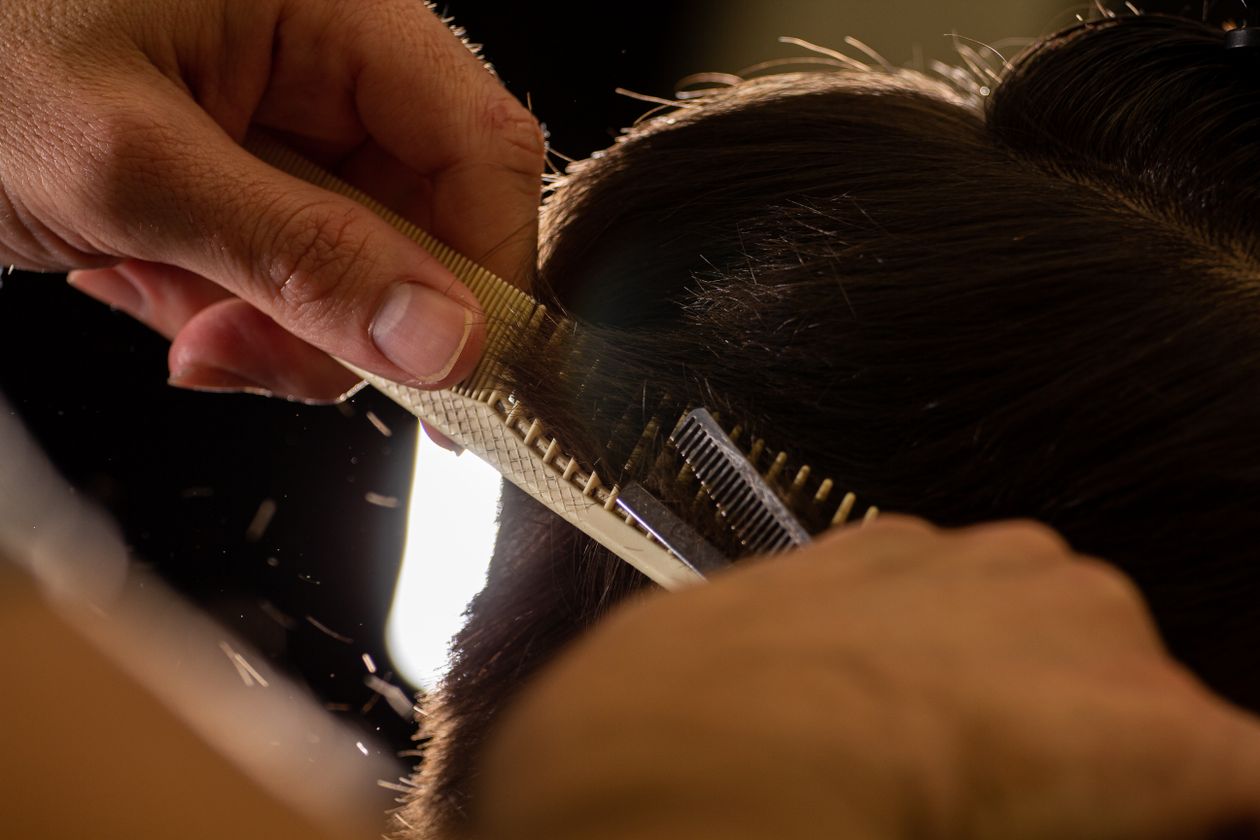
There is a name for the light version: dusting. A dusting removes only the damaged tips, a small fraction of length, and suits people actively growing their hair out who need the ends policed without a visible length change. What does not work is the opposite strategy, skipping a year of trims to gain length and then losing the damaged length all at once. The math never favors it, because traveling splits take healthy hair with them.
Slowing the damage between trims
Trim frequency is partly a lifestyle report. Heat without protectant, rough brushing of wet hair, tight styles pulling on the same edges daily, cotton pillowcase friction, and Piedmont sun all consume ends faster. Gentle detangling from the ends upward, a satin pillowcase or bonnet, heat discipline, and regular conditioning slow the fraying, and hair that frays slowly can honestly go longer between trims.
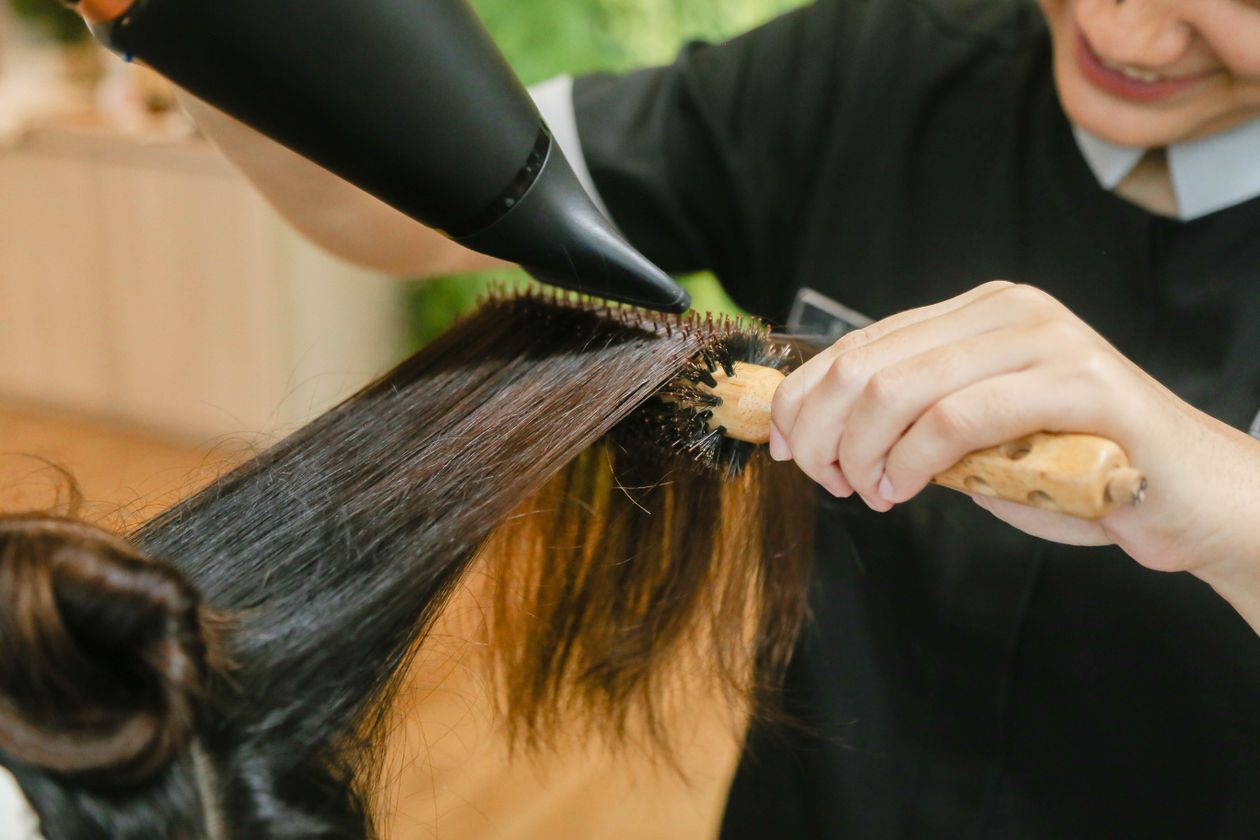
Ask your stylist to show you your ends at each appointment and to say what they see in plain terms: healthy, dusting needed, or damage traveling. That thirty-second report turns trims into a decision you share rather than a service you are sold, and it gives you a schedule built on your hair's actual condition. For most Matthews clients, that lands somewhere between every two and three months, which is a small price in length for hair that keeps the length it grows.
There is also a difference between trimming for health and cutting for a new shape, and mixing them up causes most salon disappointment. If you love your current style, maintenance trims simply refresh it, and the appointment is short and predictable. If the shape itself no longer suits you, say so at booking, because a restyle is a different, longer conversation about proportions and habits. Either way, walking in knowing which appointment you want is how you leave with the hair you pictured.
Common questions
Will trimming make my hair grow faster?
No. Growth speed is set at the scalp. Trimming helps you keep the length you grow by stopping split ends from breaking it off at the other end.
Can split ends be repaired without cutting?
Products can temporarily seal and smooth a split, which helps appearance and slows further fraying. The only actual removal is cutting above the split.
I am growing my hair out. Should I skip trims?
Skip the haircut, not the maintenance. Small dustings every few months protect your progress far better than one large corrective cut later.
Photos in this guide are representative stock images.
← All guides from StudioEast Styling Salon← Back to StudioEast Styling Salon