Every color client knows the pattern: the shade is perfect leaving the salon, good for two weeks, and then quietly different, warmer, duller, or lighter than it was. Color does not usually leave in one event. It leaks away through washing, sun exposure, hot tools, and water itself, a few molecules at a time. Managing color-treated hair is therefore less about one miracle product and more about slowing several small losses at once, in a Matthews climate that supplies sun, humidity, and pool season in generous amounts.
The table below is the honest hierarchy of what fades color, and the habit that answers each cause.
The main fade causes and their fixes
| Cause | What it does | The habit that helps |
|---|---|---|
| Frequent hot washing | Opens the cuticle and rinses pigment out | Wash less often, lukewarm water, sulfate-free cleanser |
| Sun and UV | Breaks down pigment and dries the strand | Hats outdoors; UV-protective leave-in in summer |
| Hot tools | High heat shifts tone and dulls shine | Heat protectant, lower temperatures, fewer passes |
| Pool chlorine | Strips color and can tint light shades | Wet hair with clean water and condition before swimming |
| Hard water minerals | Builds up, dulls color, adds brassiness | Periodic clarifying or chelating wash, stylist-guided |
Start with washing, the biggest lever most people control. Every wash costs a little color, so stretching from daily to every other day, or using dry shampoo at the roots on the off days, preserves shade measurably. When you do wash, lukewarm water and a cleanser made for color-treated hair keep the cuticle calmer. Condition every time, because color-treated hair loses moisture and protein balance faster, and dry hair both looks duller and releases pigment more easily.
Sun, humidity, and the Matthews summer specifically
Ultraviolet light fades hair color by the same chemistry it fades fabric, and a Carolina summer delivers it daily. A hat on long outdoor days is not a style concession; it is color preservation, and it protects the scalp at the same time. Humidity works differently: it swells the strand and frizzes the cuticle, making color look less rich even before true fading occurs. Anti-humidity styling products and smooth finishes help the appearance, but the deeper defense is moisture balance inside the hair, which is what regular conditioning and occasional deep treatments are for.
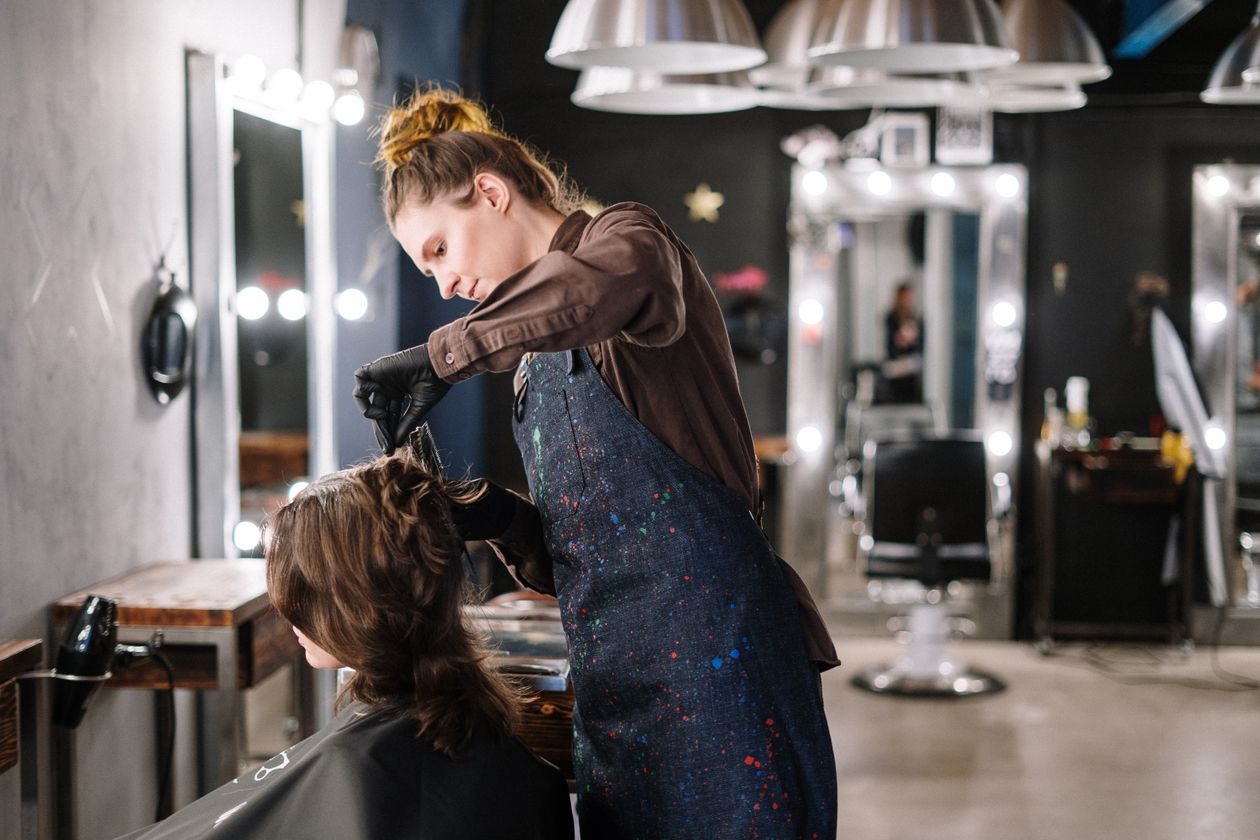
Pool season adds chlorine, which strips and can shift light colors toward green in the worst cases. The classic defense works: saturate hair with clean water and work in conditioner before swimming, so the strand absorbs less pool water, then rinse promptly afterward. It takes two minutes and saves a corrective appointment.
Keeping color-treated hair healthy, not just bright
Color changes hair structure, especially lightening, which lifts the cuticle and removes pigment from inside the strand. Treated hair is therefore more porous, more fragile when wet, and more dependent on gentle handling: detangle from the ends up, avoid rough towel rubbing, and moderate the heat. Protein and moisture need rebalancing over time, and the balance is individual; hair that feels mushy when wet wants protein, hair that feels brittle and dry wants moisture, and a stylist can read that in the chair faster than a shelf of products can guess it.
Between full appointments, a gloss or toner refresh is the professional tool for fade. It redeposits tone, restores shine, and buys weeks of life for the shade without repeating the full color process. Pair that rhythm, home habits slowing the fade, salon glosses restoring the tone, regular trims keeping treated ends from splitting, and color stops being a two-week event. It becomes a maintained look, which is what it was supposed to be all along.
One habit ties the whole routine together: be honest with your stylist about what happens between appointments. Box color over salon color, a summer of daily pool laps, flat ironing unwashed hair at high heat: stylists have seen all of it, and the information changes what they recommend and how they formulate. Color maintenance is a partnership between the six weeks at home and the hour in the chair, and the clients whose color always looks fresh are usually just the ones whose stylist knows the whole story.
Common questions
How soon can I wash my hair after coloring?
Waiting a day or two before the first wash lets the color settle. After that, wash as needed with lukewarm water and a color-safe cleanser.
Why does my color always turn brassy?
As artificial pigment fades, the warm natural undertones of the hair show through, and minerals and sun speed it up. Toner or gloss refreshes are the standard correction.
Can I color my hair again if it feels dry?
Tell your stylist and let them assess. Sometimes conditioning treatments and a gloss are the right move first; healthy hair holds color better than compromised hair.
Photos in this guide are representative stock images.
← All guides from StudioEast Styling Salon← Back to StudioEast Styling Salon